
Looking Through Splayed Fingers: Fear, Race, and Who Gets to Look Away
Published: 3/24/2026
This piece is a creative exploration of horror as both a cinematic genre and a lived experience, especially in relation to race and contemporary society.
I watch horror movies through splayed fingers, or just above my glasses, where the violence and ghastly, contorted bodies dissolve into a soft, colourful blur. For someone so sensitive to loud sounds and jump scares, I return to the genre again and again, beneath covers, beside friends, laughing, gripping hands, half-hiding, half-looking.
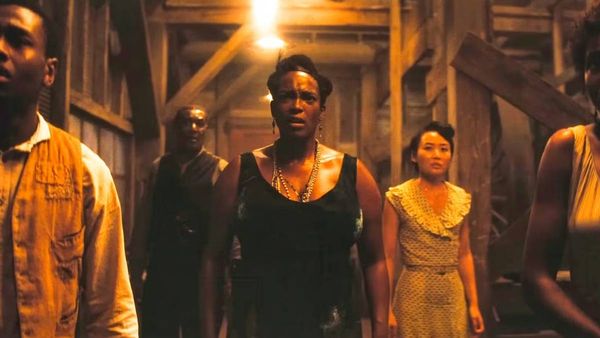
But Sinners did something different. I did not flinch nor did I look away. I watched it with eyes wide, mind alert, heart full. I was not scared. I was thrilled. And even after the fourth watch, it lingers still, not as fear, but as recognition. The many accolades it has received still do not feel like enough. But more than that, it forces the question: what does it mean that horror, particularly horror concerned with race, has re-emerged so forcefully now?
We are living in a moment where truth itself feels unstable. People retreat into echo chambers, arguing over whether all lives matter, or most lives, or Black lives. “Woke” becomes both insult and identity. Immigration raids turn deadly and still, for some, unbelievable. Meanwhile, mainstream media is consolidated, corporatised, filtered through the interests of the ultra-wealthy and struggles to hold collective attention long enough to make real meaning or change.
Non-fiction strains under this weight. Statistics can be dismissed, and lectures can be ignored. Even first-hand accounts are questioned, reframed, or reduced.
But horror does something differently. At its most basic, horror unsettles; it produces fear, discomfort, and unease. When horror turns its gaze toward race, it does something more by making visible what is so often denied. Horror does so not as argument, but as feeling and as experience. And yet, it would be too easy to say that horror creates empathy. Horror can just as easily turn suffering into spectacle, something to be consumed, reacted to, and forgotten or worse. The question is not whether horror works, but when and for whom.
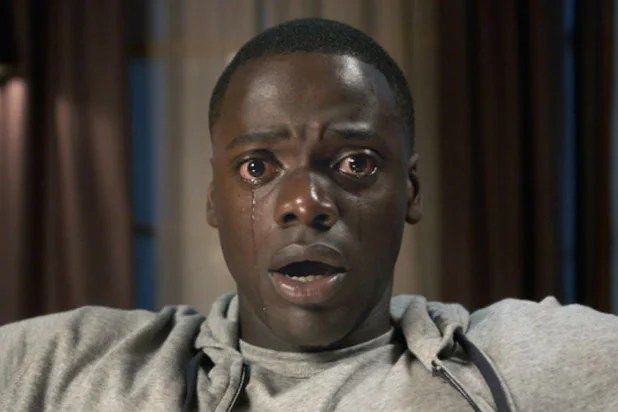
In Get Out, the “sunken place” is not just a metaphor; it is a cultural and racial sensation. The loss of control, the watching of oneself from a distance, the quiet horror of being present but powerless. It is not new knowledge, but a translation of emotions black people have felt for generations and across continents. For those who know the feeling, it is recognition. Horror does not set out to prove racism’s existence. It asks, instead, what does it taste like, sound like, feel like inside the bones and sinew? And that distinction matters because in a post-truth moment, feeling often travels further than fact.
The genre has always relied on disrupting the familiar. The haunted house, made popular in the 1980s, is terrifying not because of what is strange, but because of where the strange appears. The home, supposedly safe, becomes hostile, uncanny, and wrong. This disruption begs the question: what happens when the idea of safety itself begins to erode? For the horror to be horrifying the strange must exist alongside the normal, social reality. Today, perhaps the haunted house must give way to a rented flat or an overcrowded apartment... perhaps a temporary accommodation assigned without care. In His House, two refugees arrive in Britain after surviving unimaginable loss, only to find themselves trapped again, this time within the walls meant to shelter them. The horror is not just supernatural. It is bureaucratic. It is systemic and it is cold.
In the Caribbean, our horrors have always been close to us. The La Diablesse, the Soucouyant, the Ti Bolom... are all figures that live in story, in warning and in memory. Their power has never been in their form alone, but in belief.
I imagine them now in a fluorescent-lit office, gathered around a table, restless.“Since electricity come, nobody afraid again,” Bolom mutters.
“There was a time people would turn their clothes inside out in the middle of the road if they think I coming. Some running naked!”
“Not even one proper story,” another complains, hoofs scuffing the floor. “Child missing and people laughing, saying they gone by their friends or the girl go by her man.”
They grumble. They worry. These monsters are afraid because their power has always depended on fear and attention.
Our monsters now have changed. Because here, now, the horror is not hidden in the bush or the dark road home. It is structural. It is visible. It is ongoing. It is land we cannot afford to own. Hotels rising where communities once stood. Hurricanes growing stronger, seas inching further inland, coastlines quietly disappearing. Fishermen blasted from their boats with no recourse. Laws that exist only on paper. Leaders who bend and stall and wait, wringing their hands hoping for a saviour. So today, the horror is not that we cannot see it. It is that we see it clearly and still feel unable to move. Our home has become hostile, uncanny and wrong. The illusion of safety is gone.
So perhaps the question is not simply what makes horror effective. It is who gets to experience it as a genre, and who is already living inside it. Because for some, horror is still something watched through splayed fingers, blurred at the edges, shared between laughter and fear. And for others, it is not a story at all. It is the condition of the world as it is.
I pull my hand from my face. The blur remains. I write.
(This essay offers an initial articulation of arguments to be developed in a forthcoming academic work.)